
Construction Invoice Comparison: Cut Material Costs 15-30% with AI
Construction material pricing up 13.1% (steel) and 22.8% (aluminum). AI construction invoice comparison identifies $3,000-$15,000 in annual savings. Subcontractor quote comparison made easy.
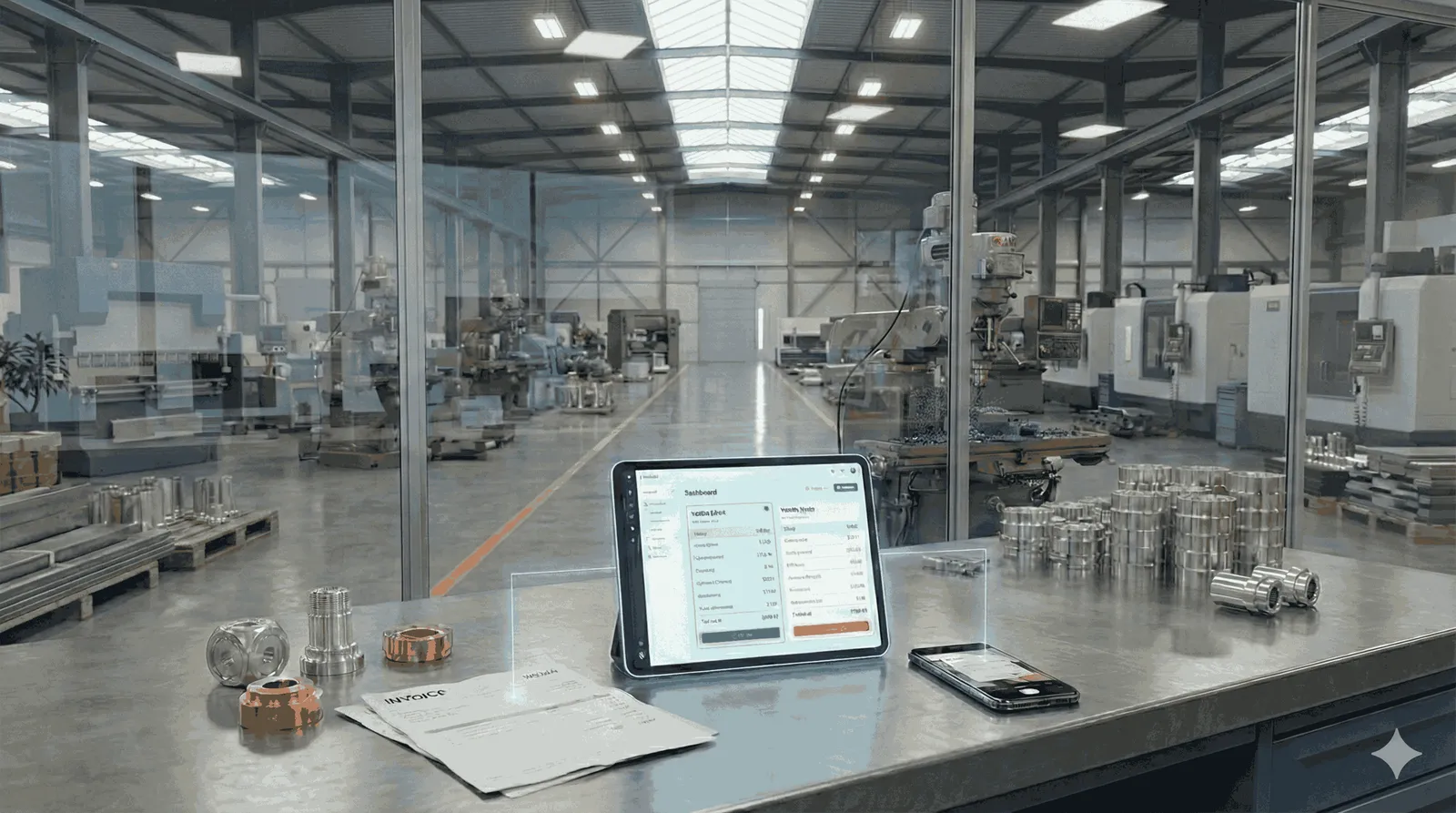
Robert Chen used to just pay construction invoices because checking them took forever. Then he started photographing them from his truck. Last month he caught a $2,400 steel overcharge he would have missed. With 43% of contractors reporting projects canceled due to rising costs (AGC 2025), steel up 13.1%, and aluminum up 22.8% YoY, every unverified construction invoice is margin you can't afford to lose. AI construction invoice comparison identifies $3,000-$15,000 in annual savings within 90 days.
Key Takeaways
"Construction material costs rose 2.5% year-over-year in August 2025, with steel up 13.1% and aluminum up 22.8%." — AGC/Bureau of Labor Statistics
"43% of contractors have had projects canceled, postponed, or scaled back due to rising material costs in 2025." — Associated General Contractors of America
"Manual invoice data entry has a documented 1-4% error rate—on a $100K annual material budget, that's $1,000-$4,000 in preventable losses."
Construction firms that compare every invoice against original quotes catch discrepancies that manual spot-checking misses—most commonly vendor price creep and freight overcharges.
"Automated quote comparison reduces analysis time from 30-45 minutes to 2-3 minutes per vendor set—critical when you don't have dedicated back-office staff."
With construction material costs up 2.5% year-over-year and 43% of contractors reporting project cancellations due to cost pressures, finding savings isn't optional—it's survival. Here's how small and mid-sized construction companies are using invoice comparison and procurement optimization to protect their margins and win more bids.
The Cost of Waiting: With steel up 13.1%, aluminum up 22.8%, and 43% of contractors already losing projects to cost pressure, every month without systematic quote comparison costs you money. A 2% price creep on a $50,000 material order is $1,000 you'll never see again — and that's profit, not revenue.
What contractors discovered after switching:
"Found out my lumber supplier had been gradually raising prices for months. That one conversation paid for a year of the tool in a single day." — Steve Mitchell, Owner, Mitchell Construction LLC, Denver
"I used to just pay invoices because checking them took forever. Now I photo them from my truck. Last month caught a $2,400 steel overcharge I would have missed." — Robert Chen, General Contractor, Bay Area Builders
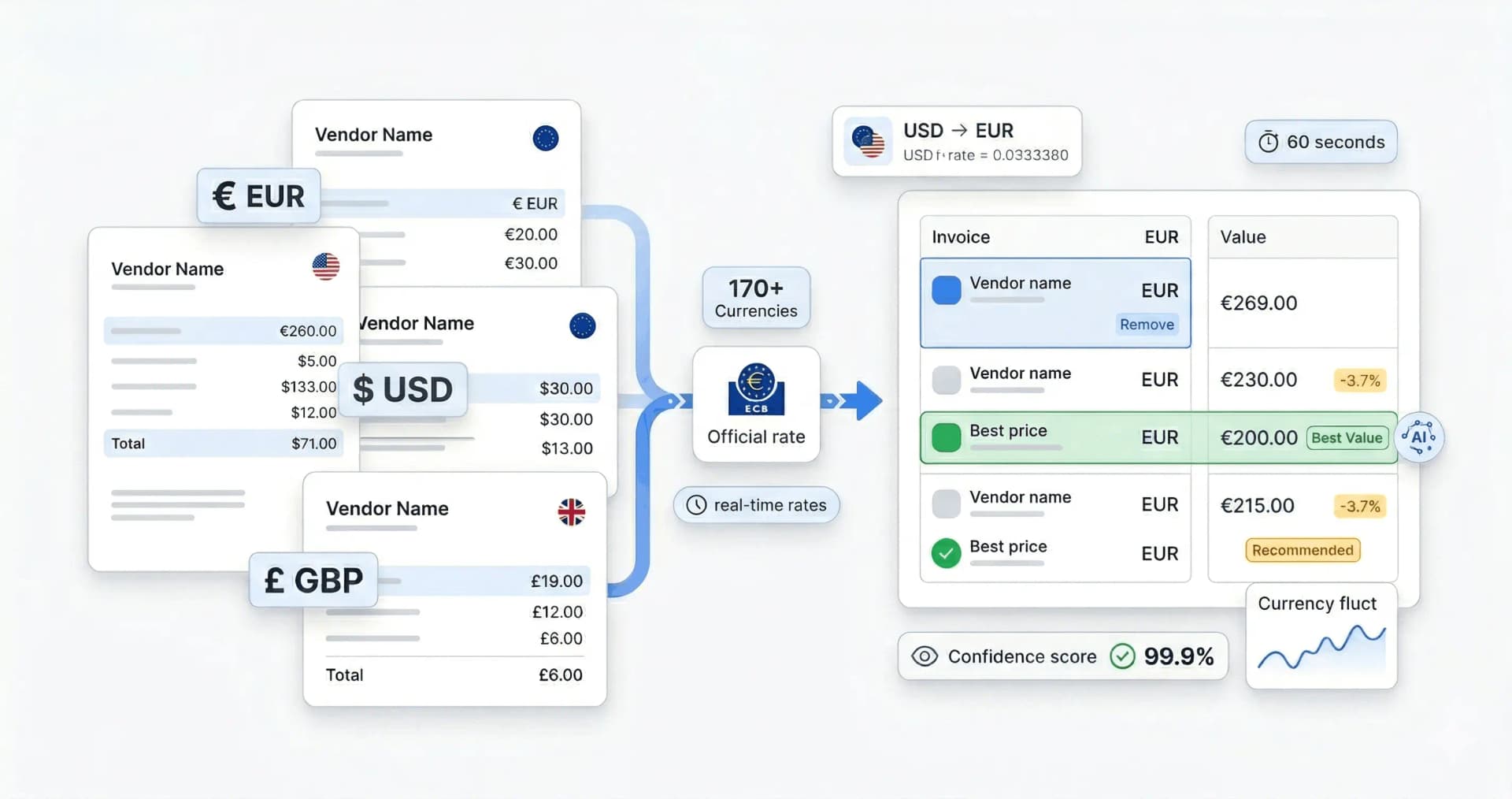
Q: What is the best software for multi-currency invoice processing? A: The best multi-currency software extracts data from invoices in any currency, converts using current exchange rates, and enables apples-to-apples vendor comparison. TRO Matcher supports 170+ currencies with automatic ECB conversion rates.
Contents
- Why Construction Invoice Costs Are So Challenging in 2026
- How Construction Companies Lose Money on Material Invoices
- What Is AI-Powered Construction Invoice Comparison?
- How to compare subcontractor quotes effectively
- Procurement strategies for biggest savings
- For Accountants and Bookkeepers
- Data ownership and audit compliance
- Case Study: Construction Invoice Comparison Saves 19%
- FAQ
Why Construction Invoice Costs Are So Challenging in 2026
Construction material costs have become increasingly volatile. The Producer Price Index for nonresidential construction inputs rose 2.5% from August 2024 to August 2025 (AGC).
But averages hide extreme swings in specific materials that can devastate project budgets for small contractors.
Current material cost increases (year-over-year, August 2025):
| Material | YoY Increase | Impact on Small Contractors |
|---|---|---|
| Aluminum mill shapes | +22.8% | Electrical, HVAC, gutters |
| Steel mill products | +13.1% | Structural, rebar, framing |
| Lumber & plywood | +4.8% | Framing, formwork, decking |
| Concrete products | +1.7% | Foundations, flatwork |
Source: AGC/Bureau of Labor Statistics, September 2025
These increases compound quickly. For a 5-person residential contractor with $200,000 in annual material purchases, a 13% increase in steel for a deck or addition can add $2,000-$5,000 to a single job—often eating the entire profit margin.
"Construction companies that systematically compare vendor quotes and track pricing changes identify 15-30% more savings opportunities than those relying on spreadsheets or memory."
The staff shortage makes it worse. Small contractors rarely have dedicated back-office staff to review every invoice. When you're managing jobs, meeting clients, and handling crews, invoice review becomes a "when I have time" task—which means never.
AI-powered invoice scanning isn't a luxury for large companies—it's the only realistic solution when you don't have an accounts payable clerk.
How Construction Companies Lose Money on Material Invoices
Most material cost overruns come from preventable procurement failures, not market forces. Understanding these failure points reveals where the savings opportunities hide.
Where construction budgets leak:
-
Vendor price creep: Suppliers gradually increase prices between quote and invoice. Without systematic comparison, these increases go unnoticed. A 2% price creep on a $50,000 material order is $1,000 lost.
-
Quote comparison paralysis: When comparing 3-4 subcontractor quotes with different formats, line item descriptions, and unit measurements, busy contractors default to bottom-line comparison only—missing value differences that cost more long-term.
-
Manual data entry errors: Transferring invoice data to spreadsheets has a documented 1-4% error rate. On $100,000 in annual material purchases, that's $1,000-$4,000 in errors—some causing overpayments, others causing underbilling that damages vendor relationships.
-
Volume discount blindness: Without visibility into total spending across projects, contractors miss opportunities to consolidate orders and negotiate volume pricing. Even combining two residential jobs' lumber orders can unlock 5-10% discounts.
-
Change order chaos: Material substitutions and scope changes create invoice confusion. Without clear comparison to original quotes, contractors accept charges they shouldn't—especially when juggling multiple active jobs.
If you've ever said "I don't have time to check every invoice," you're not alone—but that's exactly where money disappears.
Compare material quotes before your next project. Upload quotes from your steel, lumber, or concrete suppliers. Find the savings hidden in a $50K order.
What Is AI-Powered Construction Invoice Comparison? (Save 150+ Hours Annually)
AI-powered invoice comparison uses machine learning to extract data from invoices, quotes, and purchase orders—regardless of format—and automatically compare them to identify discrepancies and savings opportunities.
How the process works:
-
Upload any format: PDF, phone photo, Excel, or CSV. Snap a picture of the invoice from your truck—the same receipts scanning technology that handles retail and restaurant invoices works on delivery slips too.
-
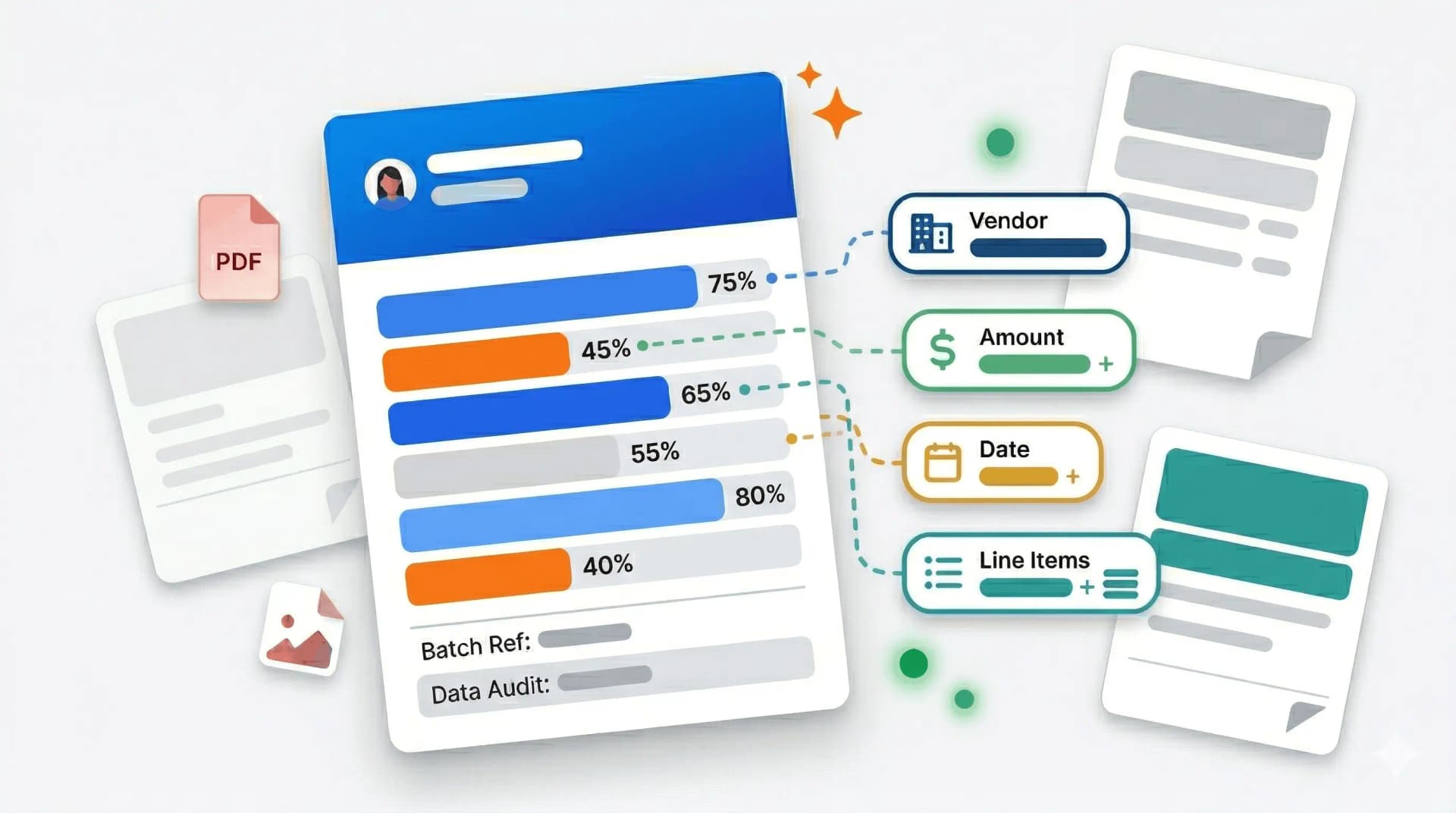
Automatic data extraction: AI invoice data extraction pulls vendor details, line items, quantities, unit prices, and totals in under 60 seconds. No typing required.
-
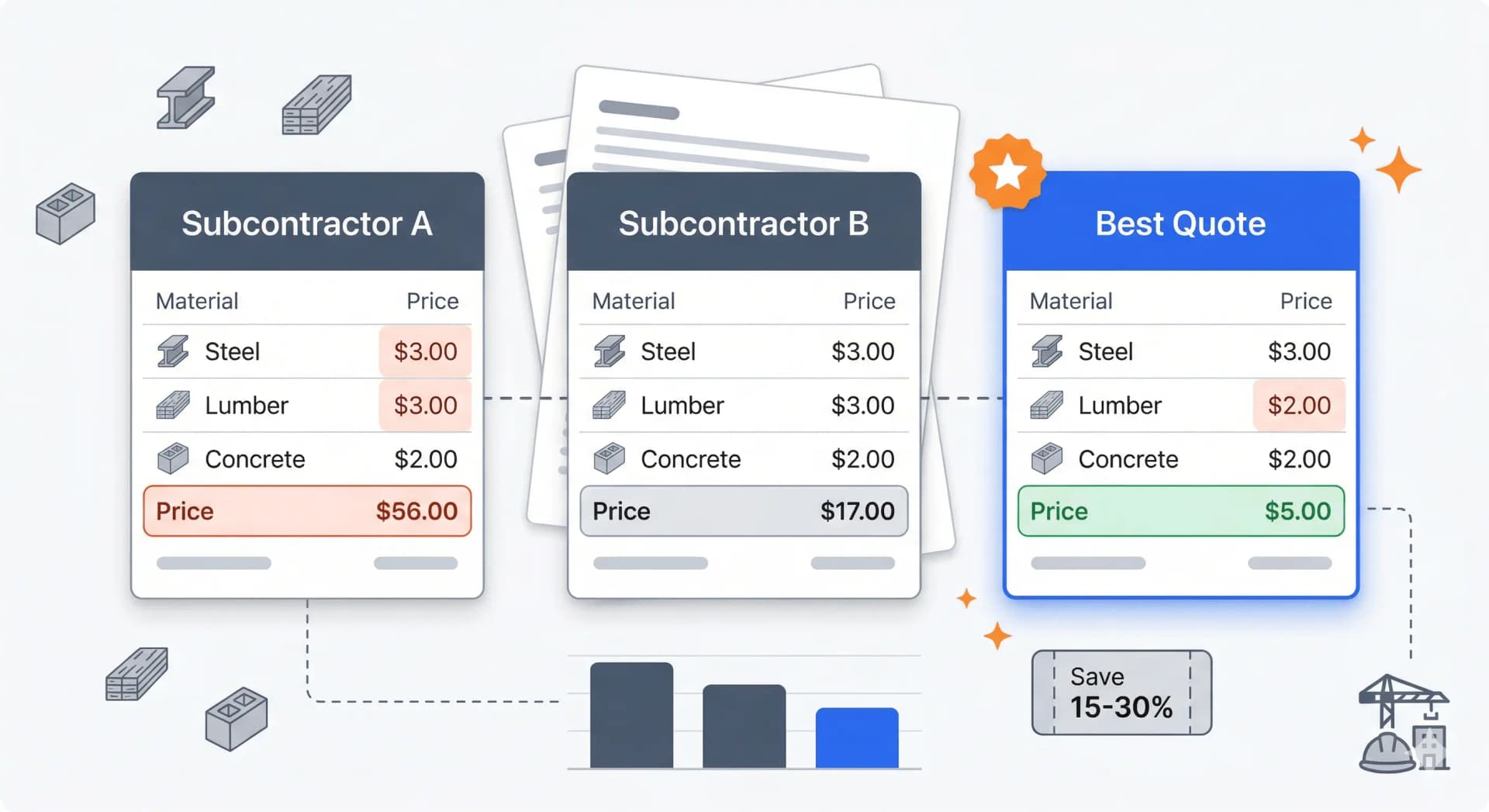
Side-by-side comparison: Compare multiple vendor quotes or match invoices against original purchase orders. Price variances highlighted instantly.
-
Variance analysis: The system calculates percentage differences, flags unusual pricing, and shows exactly where you're paying more than quoted.
-
Actionable recommendations: Get suggestions for negotiation points based on the comparison results.
How AI Handles Construction Material Invoices
Construction invoices come in all formats—handwritten quotes from the lumber yard, emailed PDFs from steel suppliers, photos of delivery tickets. Manual data entry takes 15-20 minutes per invoice and runs a 1-4% error rate. Most contractors don't have that kind of time.
The alternative: snap a photo from your truck. Dirty, crumpled, poorly lit—doesn't matter. A steel order with 50+ line items gets extracted in under 60 seconds. Each field shows a confidence score, so you know which prices need a second look. Then export to CSV or Excel spreadsheet for QuickBooks, or push directly to Xero or Sage.
"I shoot material invoices the moment the delivery shows up. By the time I'm back at the trailer, everything's already pulled into the system. Found a lumber supplier charging 8% above the quote—they 'forgot' to mention the price went up." — Jake Morrison, Project Manager, Morrison Commercial Builders (Denver)
With steel up 13.1% and aluminum up 22.8% this year, a single pricing error can eat your entire margin on a job.
Time savings for a typical 3-person contracting business:
| Task | Manual Method | AI Method |
|---|---|---|
| Extract data from material invoice | 20-30 min | 2 min |
| Compare 3 subcontractor quotes | 30-45 min | 3 min |
| Weekly invoice review (10 invoices) | 4-5 hours | 30-40 min |
| Annual time saved | — | 150+ hours |
For a contractor billing at $75/hour, that's over $11,000 in recovered productive time annually—time you can spend on jobs, not paperwork.
Related reading: Invoice Comparison vs Manual Excel: Time & Cost Analysis breaks down the full ROI calculation for small businesses switching from spreadsheets.
Also see: Manufacturing Procurement: Comparing Vendor Quotes Fast — manufacturers face similar procurement challenges and can apply the same systematic vendor analysis approach. Plus: Restaurant Owner's Guide to Supplier Cost Control — how restaurants cut food costs 3-7% with the same AI-powered comparison tools.
For a complete walkthrough of automating your back-office invoice processing, see our AP automation guide.
How do leading contractors compare subcontractor quotes effectively?
Subcontractor quote comparison is where many small contractors leave the most money on the table. Different formatting, varying scope inclusions, and inconsistent unit pricing make apples-to-apples comparison difficult.
Best practices for subcontractor quote analysis:
Normalize the scope before comparing price
Before looking at bottom-line numbers, extract and compare what's actually included:
- Scope inclusions/exclusions: One electrician's "complete rough-in" might exclude panel installation another includes
- Labor vs. materials breakdown: Critical for understanding where markup sits
- Timeline commitments: A sub who can start next week may be worth a premium over one available in six weeks
- Payment terms: Net-30 vs. progress billing impacts your cash flow on longer jobs
- Warranty and callbacks: Cheap today, expensive when you're back on-site fixing their work
Use technology to eliminate bias
Manual comparison introduces unconscious bias toward familiar subs or easier-to-read quotes. AI extraction creates a level playing field by normalizing all quotes to the same format.
What AI catches that contractors miss:
- Unit price discrepancies buried in lengthy quotes
- Quantity differences for the same scope of work
- Hidden fees in terms and conditions
- Price increases from previously submitted quotes on similar work
Keep records for vendor negotiations
Export comparison results after each project to build your own pricing records. Which subs consistently come in under quote? Which have scope creep? Documenting this data becomes your most powerful negotiation tool.
Contractors who compare quotes systematically rather than by gut feel report significant time savings on procurement decisions while making better vendor choices—because they're comparing real numbers rather than relying on memory and relationships.
What procurement strategies deliver the biggest cost savings?
Based on industry research and our platform data, these strategies deliver measurable ROI for small contractors:
1. Consolidate orders across jobs
Combining material orders for multiple active projects unlocks volume discounts. A residential contractor running 3 similar jobs simultaneously can often negotiate 8-12% off lumber by ordering together.
Potential savings: 5-15% on consolidated orders
2. Just-In-Time material delivery
Ordering materials to arrive exactly when needed reduces storage costs, theft risk, and damage—especially important for contractors without secure warehouse space.
Potential savings: 3-8% reduction in waste and carrying costs
3. Build supplier relationships with data
Long-term partnerships with key suppliers yield better pricing and priority allocation during shortages. But negotiation works better when you can show them your actual purchase history and volume.
Potential savings: 5-10% through documented relationships
4. Compare every invoice to the original quote
This is where AI automation makes the biggest difference. When every invoice is automatically compared to the PO or quote, price creep becomes impossible to hide.
Potential savings: 2-5% recovered from caught discrepancies
5. Recycle and reuse where specs allow
Recycling construction waste and reusing materials (trim, hardware, fixtures) reduces costs on residential remodels where clients approve.
Potential savings: Up to 15% on applicable materials
For Accountants and Bookkeepers Serving Contractors
If you manage finances for construction clients, invoice comparison transforms the monthly reconciliation nightmare into a streamlined process.
How TRO Matcher helps accounting professionals:
- Fast invoice comparison: Upload client invoices in any format, get side-by-side price variance analysis in minutes
- Audit-ready documentation: Every comparison is timestamped and exportable
- Client-ready exports: Professional PDF reports or CSV files for client review
- Export to accounting software: CSV and Excel spreadsheet exports ready for import into QuickBooks, Xero, and other accounting platforms
The partnership opportunity: Accountants and bookkeepers who introduce invoice automation to their contractor clients become indispensable. You're not just doing their books—you're actively finding them money.
When you can show a client you identified $3,000 in vendor overcharges during routine bookkeeping, that's a conversation about value, not just fees.
Your Data, Your Control: GDPR Article 20 Compliance
Unlike legacy AP systems that lock your data in proprietary formats, TRO Matcher ensures you always own and control your information.
Why data portability matters for contractors:
- Audit readiness: Export complete invoice comparison history for tax audits or insurance claims
- Switching freedom: If you change systems, take all your data with you—no vendor lock-in
- Legal protection: Maintain documented proof of what you paid, when, and why
- GDPR Article 20 compliance: Full data export at any time in standard formats (CSV, PDF)
For construction companies, this audit trail is critical. When a project goes to dispute or an insurance claim requires documentation, having timestamped, exportable records of every invoice comparison can be the difference between winning and losing.
What you can export:
- All uploaded invoices and extracted data
- Every comparison report with variance analysis
- AI recommendations and comparison results
No phone calls to support, no "export fees," no waiting. Your data is yours—download it anytime.
TRO Matcher vs. Alternative Solutions
| Feature | TRO Matcher | Spreadsheets | Other Invoice Tools |
|---|---|---|---|
| Setup time | 5 minutes | N/A | Varies |
| Monthly cost | $0-19 | Free | $20-100/month |
| Learning curve | None | Moderate | Low-Moderate |
| Quote comparison | AI-automated | Manual formulas | Usually not included |
| Phone photo support | Yes (HEIC, JPG) | No | Varies |
| Data export | One-click (GDPR Art. 20) | Manual | Varies |
| Built for contractors | Yes | Generic | Generic |
| Minimum company size | 1 person | Any | 1 person |
Invoice capture tools like Dext ($25+/month), Shoeboxed ($9-79/month), and AutoEntry ($12+/month, credit-based) focus primarily on extraction without comparison features. For contractors who need both extraction and subcontractor quote comparison, TRO Matcher delivers both capabilities at a fraction of the cost.
Case Study: Construction Invoice Comparison Saves 19% on Materials
Company: 4-person residential remodeling contractor, Denver metro area
Annual material purchases: $180,000
Challenge: Owner doing invoice review "when he had time"—which meant invoices piled up, vendors were paid without verification, and price discrepancies went unnoticed. No dedicated office staff.
Before TRO Matcher:
- 2.1% average overpayment rate from undetected price increases
- 45 minutes average time to compare subcontractor bids (when done at all)
- Vendor negotiations based on gut feel, not data
- Lost $3,780 annually to undetected overcharges
After 6 months with TRO Matcher:
- 100% of invoices compared against original quotes automatically
- Overpayment rate dropped to 0.3%
- Quote comparison time: 3 minutes per vendor set
- Identified $12,400 in negotiation opportunities with documented price comparisons
Total first-year impact:
- $3,240 recovered from price discrepancy detection
- $8,500 in negotiated savings with data-backed supplier discussions
- 180 hours saved in paperwork (redirected to billable work)
- 19% reduction in effective material costs
"I used to just pay invoices because checking them took forever. Now I photo them from my truck, and the app tells me if something's off. Found out my lumber supplier had been gradually raising prices for months. That conversation paid for a year of the tool in one day."
Most contractors identify their first pricing discrepancy within the first week. Photo your next material invoice from your truck—that's all it takes.
Frequently Asked Questions
How much can construction companies save on material costs with AI invoice comparison?
Construction companies typically identify 15-30% in material cost savings through AI-powered invoice comparison. This comes from catching pricing discrepancies, identifying vendor overcharges, comparing subcontractor quotes accurately, and negotiating better rates with data-driven insights. Small contractors often see the largest percentage gains because they previously had no systematic review process.
What are the biggest challenges in construction material procurement?
The top challenges include volatile material prices (steel up 13%, aluminum up 23% in 2025), managing multiple vendor quotes in different formats, tracking price changes across projects, manual invoice errors causing 1-4% overpayments, and lack of back-office staff to review invoices systematically. For small contractors, the staff shortage makes automation essential—not optional.
How long does it take to compare subcontractor quotes manually vs with AI?
Manual subcontractor quote comparison takes 30-45 minutes per set of quotes, involving spreadsheet data entry, normalizing different formats, and cross-checking line items. AI-powered tools like TRO Matcher reduce this to 2-3 minutes with automated extraction and side-by-side comparison that highlights price variances, scope differences, and terms discrepancies automatically.
What construction materials have the highest cost volatility?
As of August 2025, aluminum mill shapes show the highest volatility at +22.8% year-over-year, followed by steel mill products at +13.1% (AGC). Lumber and plywood increased 4.8%, while concrete products rose 1.7%. Overall construction input costs rose 2.5% year-over-year, but specific material categories vary significantly.
Can small contractors benefit from invoice comparison tools?
Small contractors often benefit the most from invoice comparison tools. Without dedicated procurement or accounts payable staff, they face higher risk of vendor overcharges and pricing inconsistencies. The time savings alone—converting 15-20 minute manual invoice processing into 1-2 minute automated extraction—frees owner-operators for billable work. TRO Matcher starts free and requires no IT setup.
How does invoice comparison help with subcontractor management?
Invoice comparison tools help verify subcontractor billing against original quotes, catch scope creep charges, identify unauthorized price increases, and maintain complete audit trails. This reduces disputes by providing documentation when questioning charges. Over time, exporting and reviewing comparison results helps you make smarter subcontractor selection decisions.
Is my invoice data exportable and GDPR compliant?
Yes. TRO Matcher is fully GDPR compliant including Article 20 Data Portability. Export invoices and receipts directly to Xero or Sage with one click. All users can export CSV or Excel spreadsheet for QuickBooks and other accounting software. Your data is never locked in—critical for audits, tax documentation, and insurance claims that construction businesses face regularly.
What's the ROI timeline for invoice comparison software?
Most small contractors see positive ROI within the first month. Based on average time savings of 3+ hours weekly at $50-75/hour billing rates, plus 1-3% reduction in overpayments, even the Pro plan ($19/month) pays for itself many times over. A contractor processing $100K+ in annual materials typically identifies $3,000-$15,000 in annual savings opportunities.
Sources and Methodology
This analysis is based on:
- AGC/Bureau of Labor Statistics: Producer Price Index reports and contractor surveys (September 2025)
- TRO Matcher Platform Data: Analysis of construction invoice comparisons processed through our platform
- Industry benchmarks: Manual data entry error rates, procurement time studies
Bottom Line
With construction material costs rising 2.5% year-over-year and 43% of contractors reporting project disruptions from cost pressures, systematic invoice comparison isn't a nice-to-have—it's essential for survival.
The math is straightforward: contractors who compare every invoice against quotes and track vendor pricing over time identify 15-30% more savings than those who don't. When you don't have staff to do this manually, AI automation is the only realistic solution.
"AI-powered invoice comparison helps construction companies identify 15-30% in material cost savings by catching vendor price discrepancies, comparing subcontractor quotes in minutes instead of hours, and providing data-driven negotiation leverage—with full data portability for audits and compliance."
Ready to find your hidden savings? Upload your first subcontractor quote free — no credit card required. See the comparison in under 60 seconds.
Compare Material Quotes in Minutes, Not Hours
Upload subcontractor quotes or supplier invoices and get AI-powered side-by-side comparison instantly. Free to start — no credit card required.
Start Free